
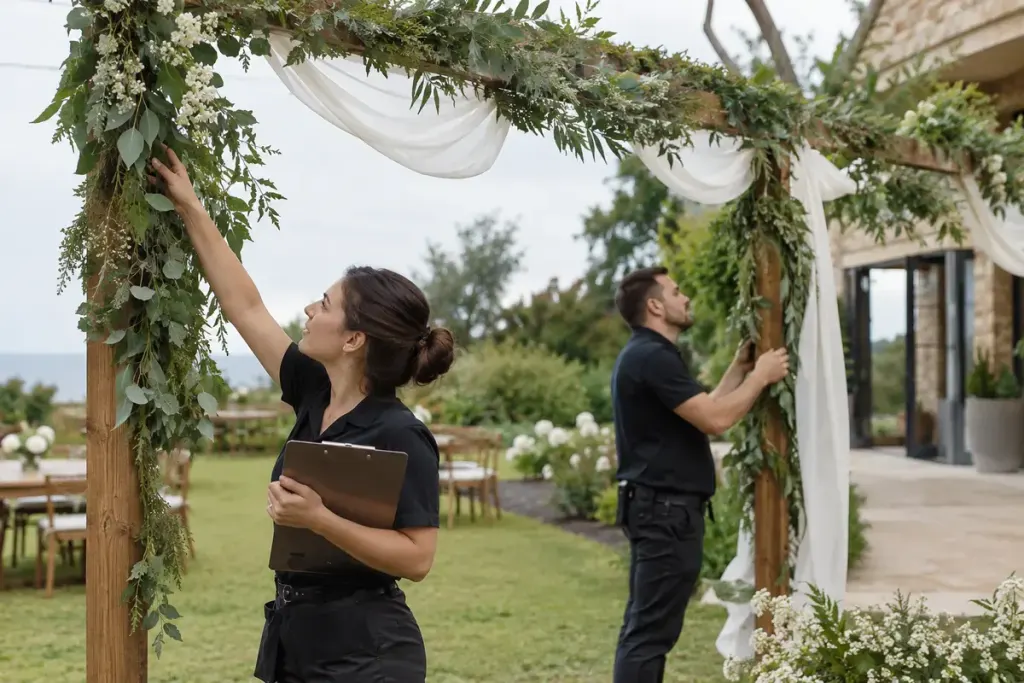
A fabric backdrop can look light and harmless in a still photograph. Outdoors, its surface also meets the wind. The same applies to freestanding signs, arches, and decorative panels. The planning question is not simply whether they look stable during setup, but who decides what happens when conditions change.
Discuss the actual site and equipment with competent suppliers. Ask for the intended installation method, operating limits, and weather response. Do not add improvised weights or attachments and assume they make a structure safe.
Give the decision to a named person
Someone needs authority to stop installation, remove a decoration, close an area, or move an activity. Identify that person before the event, along with the supplier and venue contacts they need. A decision that depends on finding several busy people can arrive too late.
The UK Health and Safety Executive’s venue design guidance discusses ground conditions, prevailing wind, and the effect of weather on temporary structures. Its practical lesson for planning is to assess the site as well as the object. Applicable duties and standards depend on the event’s location.
Make the alternative usable
If the outdoor welcome sign must be removed, where will guests find directions? If the ceremony backdrop cannot be used, can the indoor arrangement operate without blocking an exit? Plan those details while there is time to choose an attractive alternative.
- Keep routes and exits clear in every version of the layout.
- Agree who monitors forecasts and on-site conditions.
- Allow enough time for trained staff to act safely.
- Communicate changes to catering, photography, and guest-facing teams.
A single wind-speed rule copied from another event is not a substitute for equipment-specific advice. The right response depends on the structure, installation, site, and supplier instructions. A successful weather plan lets the team make the safer choice without improvising the whole event at the same time.