
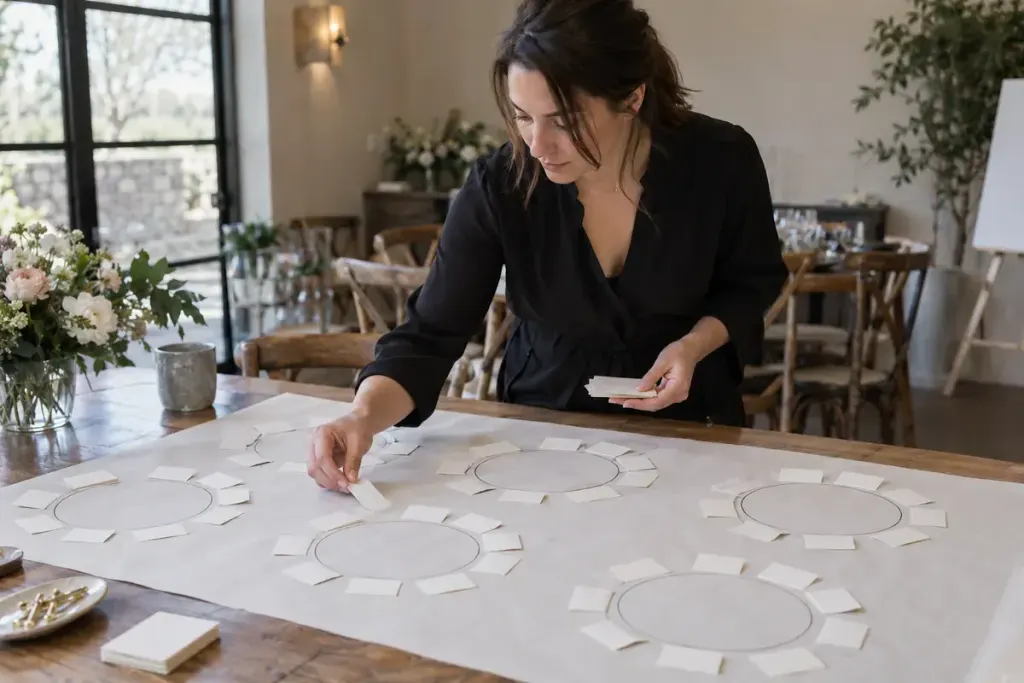
The host has moved two guests, the caterer is working from yesterday’s table list, and the printed place cards reflect an even earlier version. Each document looks plausible. Together they create an avoidable problem at the door.
A seating plan needs more than careful placement. It needs a controlled point at which the arrangement becomes the version everyone uses.
Name one working copy and one owner
Keep the live plan in a clearly identified location and give one person responsibility for accepting changes. Other people can suggest edits, but parallel copies should not quietly become competing instructions.
Add a version label and update time to exports. A simple “Guest seating — version 4 — Thursday 16:00” is more useful than a filename containing several instances of “final.” Make the table identifiers match the venue’s floor plan and the signs that will actually be used.
Agree what freezes and when
Work backward from printing, catering and room-setting deadlines. Confirm those deadlines with the suppliers rather than assuming the plan can change until guests arrive.
The freeze does not mean nobody can cancel or a genuine access need must be ignored. It means a later change follows a defined route. Record who approved it, what moved and which people need the corrected instruction.
For an illustrative example, moving one guest after printing might require an updated host list, a replacement place card and a notification to catering. A message to the host alone may leave the meal allocation at the original seat.
Share only the details each person needs
Guest names, access requirements and dietary information should not all appear on every public display. Confirm how sensitive information will be handled and give operational details only to the people who need them for the event.
Before issuing the final working version, compare the seating count with confirmed attendance and the venue’s approved capacity and layout. Check duplicated names, missing guests and tables whose labels differ between documents.
At the event, appoint a clear contact for seating questions. Keep the current version available to the relevant team and mark older copies as superseded.
The goal is not to prevent every last-minute change. It is to make sure a necessary change reaches the whole chain of people who must act on it.