
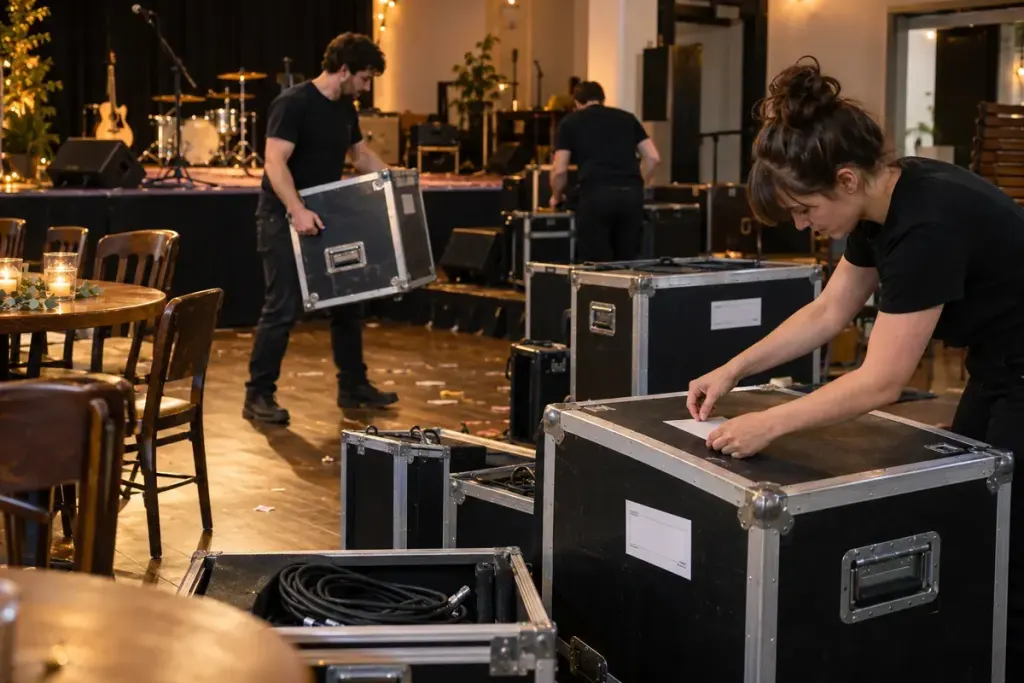
The final guest leaves, but the event is not finished. A florist expects to collect stands tomorrow, the sound company is waiting outside and nobody knows whether the boxes by the door belong to the venue. A collection plan prevents the last hour from becoming a guessing game.
Give each group of items an owner
Before the event, list hired equipment, vendor materials, organiser supplies and personal belongings separately. For each group, record the responsible contact, pickup window, access route and destination. Confirm what must leave that night and what the venue has agreed to store.
Do not promise storage without the venue’s permission. Clarify whether overnight access is available and who will be present to hand items over. A supplier’s collection time should fit the venue’s actual closing process.
Protect the final handover
Appoint a person with authority to check the room against the agreement. They should know which items are venue property and which are being removed. Keep exits and access routes clear throughout the breakdown; use qualified crews for equipment that requires specialist handling.
A practical closeout sheet might contain four columns: item group, collector, agreed time and completed check. Add a short note for an exception rather than silently ticking the box. For example, “two display bases remain in the agreed store; collection confirmed for 09:00” is a traceable handover.
Separate found property from packing
Provide a defined route for belongings left by guests. Follow the venue’s policy and avoid circulating photographs of identifying documents or personal contents in a public chat. Record who received the item and where it was placed.
Confirm the room condition and return of keys with the venue contact before the last organiser leaves. The plan should allow people to finish safely rather than rushing because the transport home is about to depart. A calm ending is designed while everyone still has time to think.