
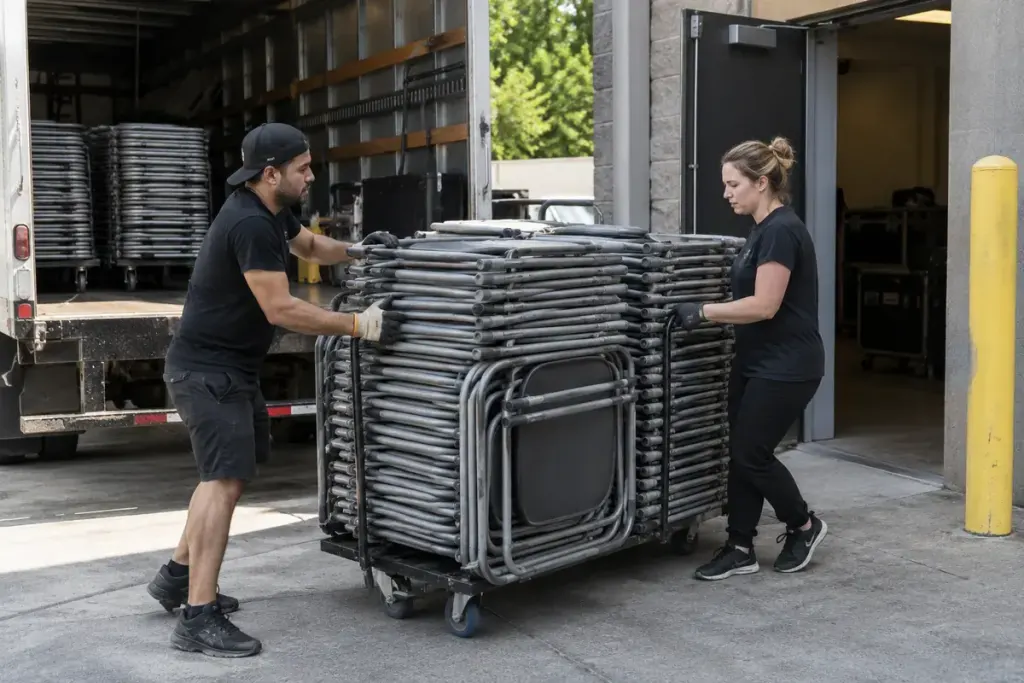
The invitation says six o’clock. That tells the guests when to arrive, but it says little about when the florist, sound technician or caterer can get through the service entrance. A workable event plan has a separate arrival schedule for the people building the room.
Work backwards from a ready space
Ask each vendor how long unloading, setup, testing and clearing packaging actually take. Confirm the venue’s access window and any restrictions on lifts, loading areas or noise. Do not assume that two teams can use the same narrow entrance at once.
For a fictional small reception, furniture might need to be placed before table decoration, while sound checks need a quieter period before guests enter. The sequence matters more than giving everyone an identical arrival time.
- List the work that must be complete before the next team can start.
- Assign an arrival window and an unloading location.
- Name the person who receives each vendor.
- Include a check that the finished area is ready and clear.
Give vendors usable information
Send the correct service address, contact number, parking arrangement and route into the room. A guest entrance photograph may be unhelpful to someone carrying equipment. Explain what happens if they arrive early or late and who can authorise a change.
Keep emergency exits and accessible routes clear throughout setup. Agree with the venue where empty cases and packaging belong. A room can look finished while a corridor full of equipment makes it unusable.
Allow a realistic buffer before guest arrival for final checks, staff briefing and unexpected adjustments. The buffer should be based on the work, not borrowed from a generic schedule.
Afterwards, note which arrival window was too tight and which dependency was missed. That record will improve the next event more than a timetable that simply records that everyone eventually arrived.