
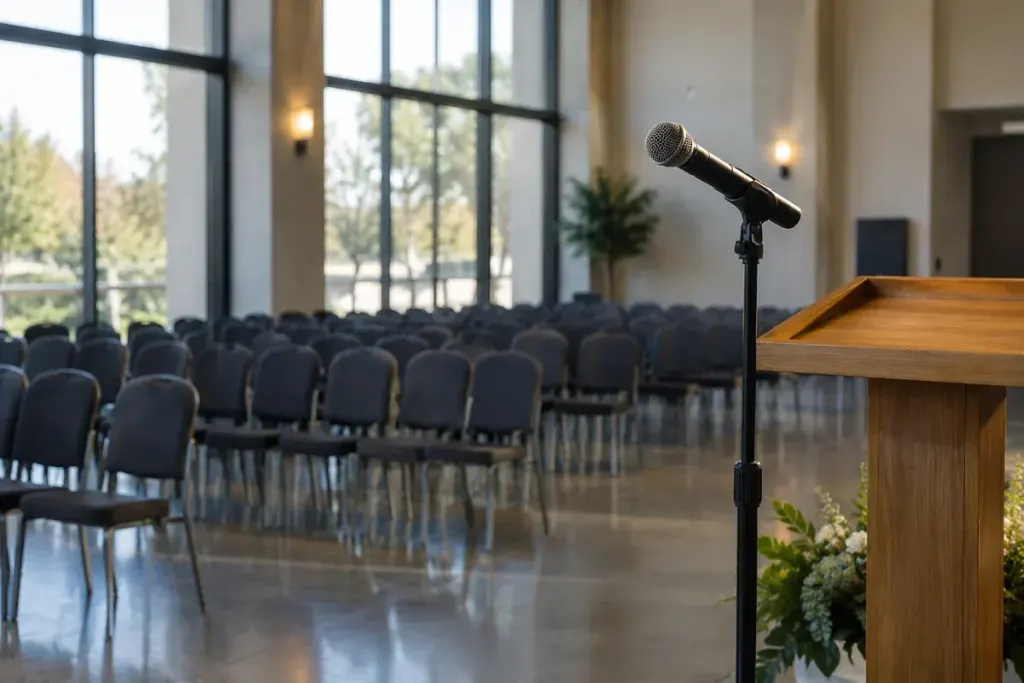
The speaker is ready, the audience is quiet, and nobody knows whether the microphone is on. A short speech can lose its first useful sentence before the sound team has even identified who is holding the device.
Rehearse the handover, not only the words
During the soundcheck, agree who carries the microphone, where the speaker receives it and who controls muting. The event host should know the same arrangement. Avoid having several people change switches independently while another person is adjusting sound.
Ask the technician to demonstrate a suitable speaking distance for the actual microphone. Keep that relationship reasonably consistent. Turning your head away to point at a screen can make a clear sentence disappear; moving the microphone with your speech direction is a skill worth trying before guests arrive.
A compact run-through
- The host introduces the speaker and pauses.
- The microphone is handed over in the agreed place.
- The speaker waits for the agreed ready cue, then begins.
- After the final sentence, the speaker returns the microphone to the named person or stand.
Use the actual route and any steps or mobility arrangements. A beautiful lectern is not useful if it prevents the speaker from reaching the microphone comfortably. For audience questions, decide whether a runner brings a microphone or the host repeats the question before the answer.
Keep a practical fallback with the sound team, such as a spare microphone already checked for the system. Do not test by tapping or blowing into the microphone during the event.
These few minutes of preparation make the technical transition predictable. The audience can then concentrate on the person speaking instead of watching everyone negotiate the equipment.