
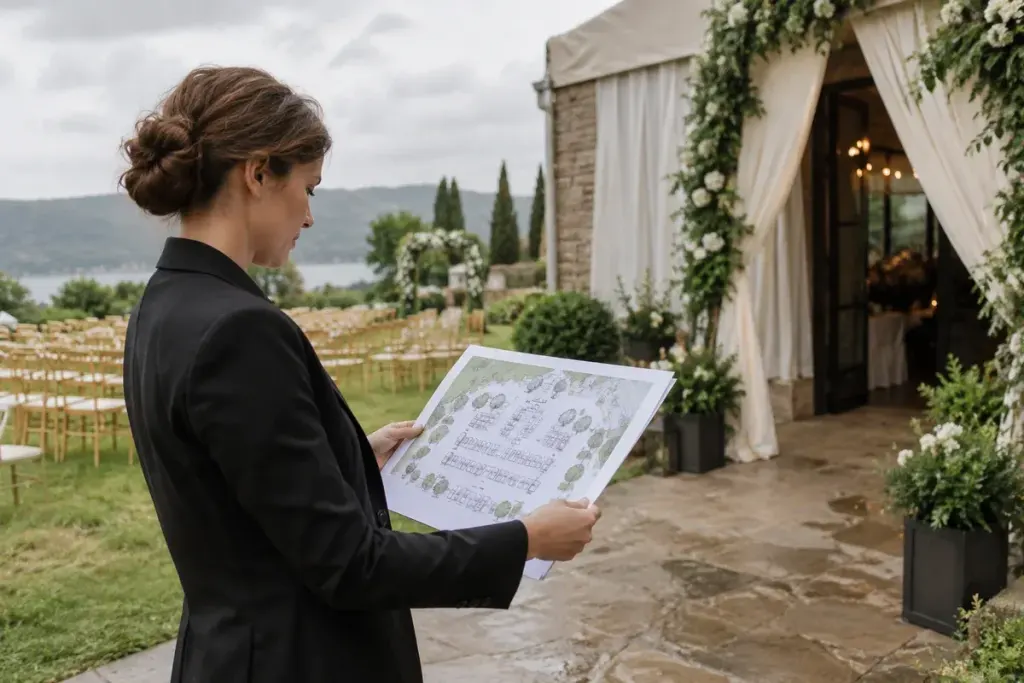
“We have a tent” sounds like a complete rain plan until the caterer asks when to move, the sound team needs power isolated and guests are already arriving at the outdoor entrance. Weather contingency is a sequence of decisions, not simply a piece of equipment.
Start by identifying which parts of the event can change and which conditions require it to stop. A light shower, strong wind and a thunderstorm do not create the same problem.
Separate comfort from safety
Cover may keep a table dry without making the area a safe place during lightning or severe wind. The National Weather Service’s lightning guidance identifies substantial enclosed buildings and suitable enclosed vehicles as shelters; an open-sided event tent is not equivalent.
Ask the venue and equipment suppliers for the limits and procedures relevant to their structures. Do not invent a wind threshold or overrule a supplier’s restriction because guests have travelled a long way. Use local official weather information and the venue’s emergency plan.
Choose a decision time that leaves time to act
Work backwards from the slowest change. Moving a ceremony may require furniture, an accessible route, signage and a sound check. The decision must come before that work becomes impossible to finish safely.
For example, an organiser might agree to review the indoor option before suppliers begin their final setup. That is a scheduling example, not a universal weather rule. The appropriate lead time depends on the venue, attendance and equipment.
Give one person the authority to call the change
Name the lead and a deputy, along with the people who supply weather and venue information. Tell vendors how the decision will reach them. A plan requiring six simultaneous approvals can leave everyone waiting while conditions deteriorate.
Write a short action list for each team: move guests, secure equipment, change signage, update arrivals information. Include people who may need assistance, and confirm that the alternative space and route are genuinely usable.
Prepare the message before it is needed
Guests need the new location, arrival instructions and any timing change. They do not need a speculative meteorological explanation. Keep one authoritative update channel and repeat the same essential details at the original entrance.
After the event, note which decision took longer than expected. Perhaps the indoor room was available but the accessible entrance was locked. That concrete lesson improves the next plan more than writing “weather handled successfully” in the event file.