
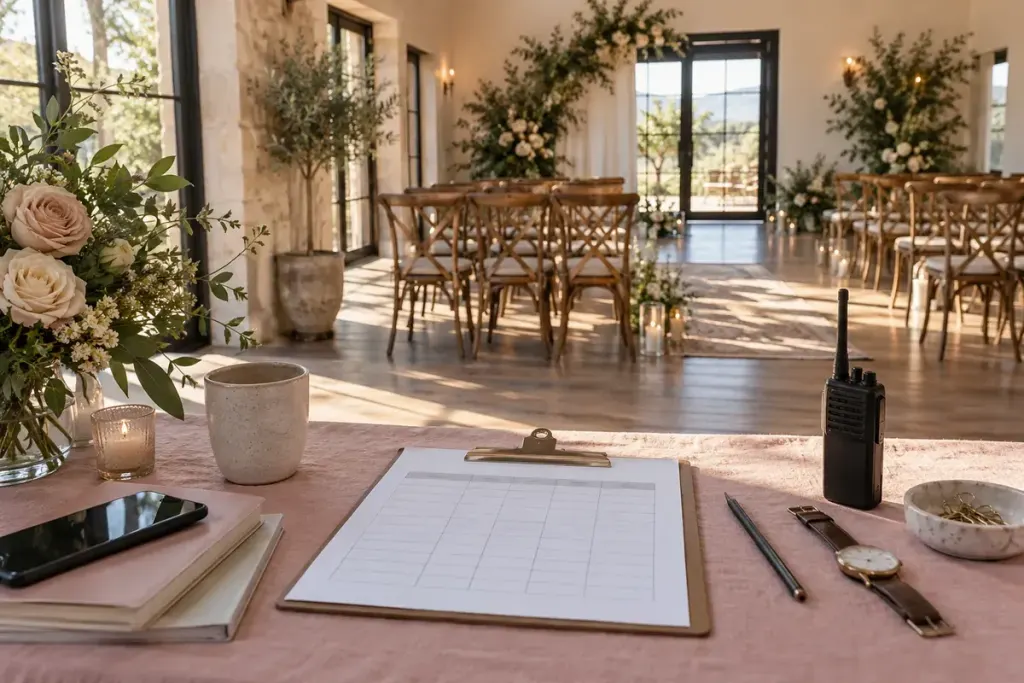
The invitation says the speeches begin at seven. The speaker is ready, but the microphone is elsewhere, the lights have not changed and the catering team is still crossing the room. The schedule has a time; it does not yet have a handover.
A run of show is a working document for the people delivering the event. Its job is to connect moments with the actions and responsibilities that make them possible. It should be specific enough to use under pressure without becoming a novel nobody reads.
Start with the moments that depend on someone else
List the main transitions: doors opening, guests moving between rooms, a presentation beginning, food service or an activity ending. For each, ask what must be ready beforehand and who confirms that readiness.
The UK Health and Safety Executive’s event-management guidance distinguishes planning from the active management and monitoring needed when operations begin. A run of show helps coordinate the programme, but it does not replace the event’s safety arrangements, competent staff or venue procedures.
Give each cue an owner and a recipient
“Start music” leaves too much open. “Programme lead confirms the room is ready; sound operator starts the agreed track” identifies who decides and who acts. Use role names that match the people actually working that day.
For a fictional small reception, a useful sequence might be: the host checks that the speaker is present, the floor lead confirms the aisle is clear, and the sound operator receives the cue. The details will differ by event; the value lies in making the dependency visible.
Keep the working sheet easy to scan
A practical row can include time, activity, owner, cue and a short note. Mark whether a time is fixed or approximate. Do not put private guest information or unrelated supplier negotiations on a sheet that circulates widely among the crew.
Use consistent names for rooms and roles. If one person says “garden room” and another says “rear hall”, confirm whether they mean the same place. Small naming differences create surprisingly large delays when someone is carrying equipment or guiding guests.
Agree what happens when the plan slips
Decide who can shorten a segment, change an order or announce a delay. Identify which commitments must be checked with the venue or suppliers before they move. Avoid improvising around safety requirements to recover lost time.
Write a brief fallback note for the transitions most likely to need it. For example, if a speaker is delayed, who confirms the revised order and how will the host receive it? The fallback should be an agreed option, not an instruction invented by a person who lacks authority to make the change.
Rehearse the handovers, then control the version
Walk through the document with the people responsible for the cues. Ask them to point out missing preparation time, unclear ownership and conflicting tasks. A five-minute review can reveal that the same person has been assigned to two rooms at once.
Label the final working version and tell the team where updates will be issued. After the event, note which transition caused confusion and why. The next schedule improves when it captures what the team learned, rather than merely replacing last month’s date with a new one.